AI · Experiment
I let an AI agent fix my website for a day – what it caught and what it missed

I make music as Rukas Waves, and around the music I have built a small website: eight browser games, two audio experiments, release pages, a press kit. Like most one-person sites, it grew by layering new things on old ones. So I tried something: I gave an AI agent the full site folder, a browser, and one instruction – check everything and fix what is needed.
This is an honest write-up of that day: what it found, what it fixed, and the places where a human still had to step in.
What it found that I would not have
None of these were visible by just opening the site. Everything looked fine. That is exactly why they had survived for months.
1. Canonical tags hiding inside the body
Three of my games had been exported from a tool that wraps every page in its own <html><body>. The real page – including the title, description and canonical link – ended up inside the wrapper's body. Browsers don't care. Google does: it ignores a canonical tag that is not in the <head>. The agent noticed it by reading the HTML structure, not the rendered page, and unwrapped all three.
2. The home page linked to pages Google was told to ignore
Game cards on my home page opened a player page, /play/?g=apex. That player is marked noindex, which is correct – it is a wrapper, not content. But it meant that after Google rendered the page, the actual game pages had no internal link from the home page at all. The fix was small: cards now link to the real game URL, and a normal click still opens the player.
<a href="/games/apex/" onclick="openPlayer(event, 'apex')">Apex Isle</a>Crawlers follow the href. Players get the player.
3. A complete second copy of the site
Somewhere along the way I had uploaded a backup into a folder called /old/. It was public, it was complete, and every page in it competed with the real one. The agent found it by probing the live server for common leftovers, not by looking at my local files – the folder did not exist on my computer any more.
4. 118 MB of dead weight
Raw WAV recordings next to the compressed MP3s the game actually loads. Uncompressed 3D models next to the optimised ones. Nine old JavaScript bundles. Duplicate PNG versions of merch images. It built a reference map – which file is mentioned by which page or script – then checked the dynamic cases by hand (games often build paths like art/u/${name}.jpg at runtime), and only then proposed a delete list.
5. Small lies in the copy
My Sudoku page promised four difficulty levels. The game has three. The press kit listed a different contact e-mail than the rest of the site. Tiny things, but they are the things a journalist or a player notices.
What it did well
- It verified instead of assuming. After every change it loaded the games in a headless browser and checked for JavaScript errors and missing files. After my upload it fetched every page from the live server and compared it with the local copy.
- It was careful with deleting. Nothing was deleted locally – unused files went into a dated trash folder, originals into a backup folder. It could not touch the server directly, so it wrote me an exact delete list instead.
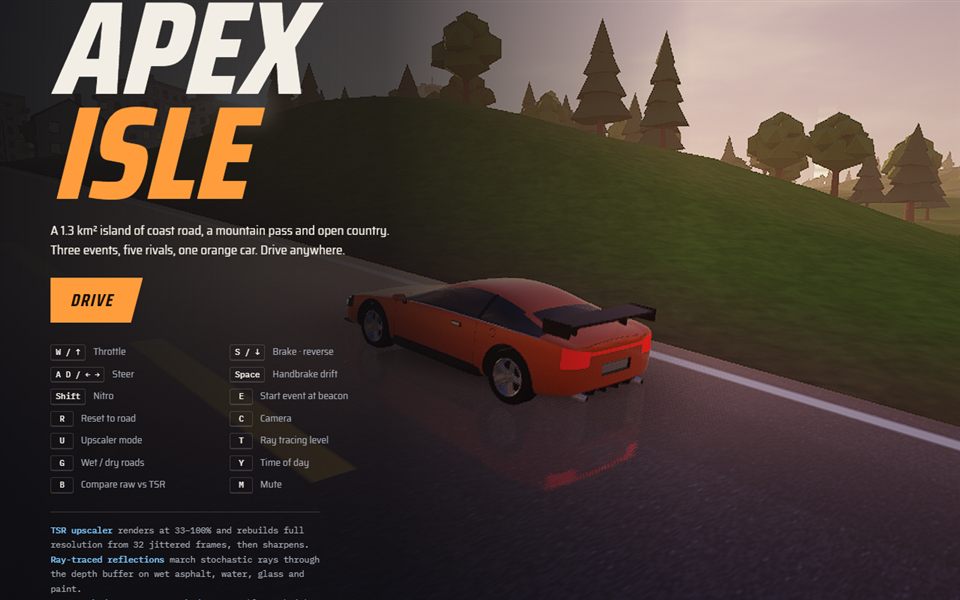
- It pushed back on wording. I described Apex Isle as "ray-traced". The agent pointed out that its reflections are screen-space ray marching, not hardware ray tracing, and that a technical audience would call that out. It was right.
- It noticed side effects. When an updated page still looked old in the browser, it found the reason – my server sent no cache headers for HTML, so browsers kept guessing – and added one line to
.htaccess.
Where a human was still needed
- Anything with my accounts. Uploading over FTP, logging in, Search Console, Reddit. It prepared everything – packaged builds, page texts, post drafts – and with my OK it even filled in and published posts in my browser. But every login and every “publish” was my call. I think that is the right line.
- Reading what I meant. I sent a screenshot of my logo with a gap in it, without a word of explanation. The agent fixed the spacing on the wrong page. The gap was actually in the game player, where the logo sat in a flex container with a
gapbetween its parts. One sentence from me and it was fixed in a minute – but it needed that sentence. - Taste. It rebuilt my inner pages so they share one design with the home page. It did that well, but when I said "we don't need the big logo at the bottom", that was a judgement it would not have made on its own.
What I would tell anyone trying this
- Give it the real thing. The actual files and access to the live site, not a description of them. Most of the findings came from comparing the two.
- Ask for verification, not just changes. "Check that every game still loads" was worth more than any single fix.
- Keep the dangerous steps human. Uploads, deletions on the server, posting in your name.
- Talk to it like a colleague. A screenshot with no context is a guess for an AI just as it is for a person.
The result is the site you're on: every game indexable, one design across all pages, 118 MB lighter. If you want to see the games it checked, they are all here: free browser games.
Written by Rukas Waves – music producer from Lithuania who builds free browser games on the side. Questions or corrections: hi@ehog.io.